-111x113.png)
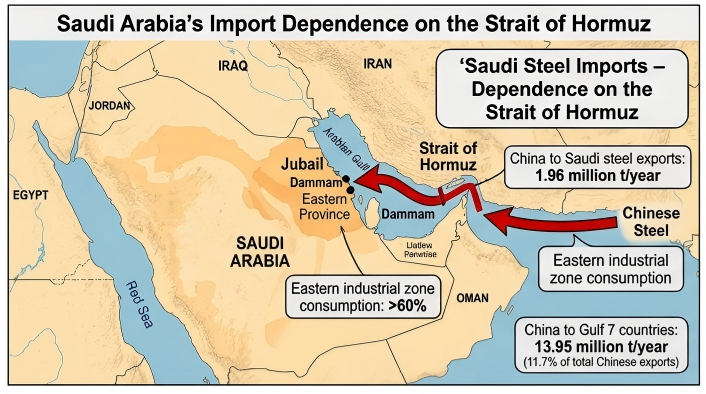
The Strait of Hormuz crisis has fundamentally changed steel procurement for Saudi Arabia. Are you making decisions with complete information?
Shipping through the Strait has effectively halted. Freight costs have surged. Insurance is unavailable. Domestic prices are responding. And the window for securing supply is narrowing.
This special report delivers the precise data and analysis you need to navigate this unprecedented market disruption and protect your supply chain.
Key insights from this report:
✅ Supply Chain Disruption Quantified
- Strait of Hormuz traffic has dropped to <1/3 of normal levels
- Over 1.16 million tonnes/month of Chinese steel exports to the Gulf are affected
- Saudi eastern industrial zone (>60% of consumption) has no viable alternative route
✅ Cost Impact Analysis
- Freight costs: +$10/tonne (to $50–55/t for HRC)
- War risk surcharges: $1,000–3,000/container
- Insurance premiums: +200%
- Total landed cost increase: $55–105/tonne (20–30%)
✅ Market Response Intelligence
- Chinese mills have stopped issuing new offers to Gulf buyers
- March new orders are frozen; April shipments face major delays
- Domestic Saudi rebar prices: SAR 2,230–2,360/tonne (+SAR 150/t)
✅ Alternative Route Assessment
- Jeddah + land transport: 1,300 km, land freight $30–50/tonne
- Fujairah/Sharjah transshipment: severe congestion, waiting time
- Cape of Good Hope diversion: +10–15 days, +30% cost (Europe only)
✅ Actionable Procurement Tools
- Regional decision matrix – Eastern vs Western Saudi Arabia
- Urgent vs medium-term action checklists
- Contract clause review guide – force majeure, trade terms, payment
- Inventory management recommendations – increase to 2–3 months
Who needs this report:
- Saudi steel buyers with imports at sea or in planning
- Procurement managers needing cost and timing guidance
- Trading companies tracking market disruption
- Project managers with fixed-price contracts needing supply certainty
- Anyone making steel buying decisions during this crisis